David J. Toscano

Attorney at Law

  • Home
  • Collaborative Law
    • Principles Of Collaborative Divorce Practice
    • Sample Collaborative Participation Agreement
  • Estate Planning
  • Contact David
  • Submit a Payment
  • Terms & Conditions

The Virginia General Assembly Needs More Women Legislators!

August 31, 2015 by David Toscano

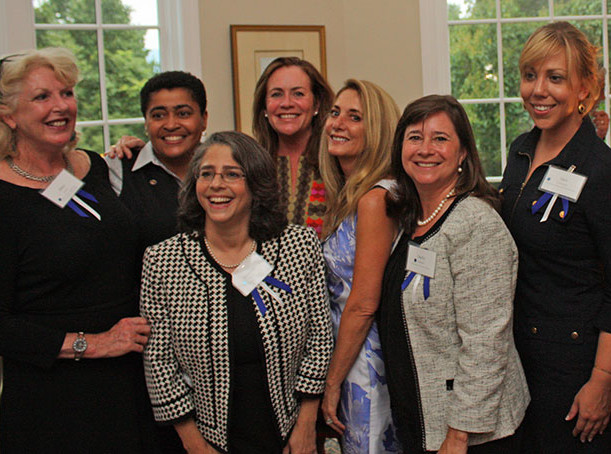
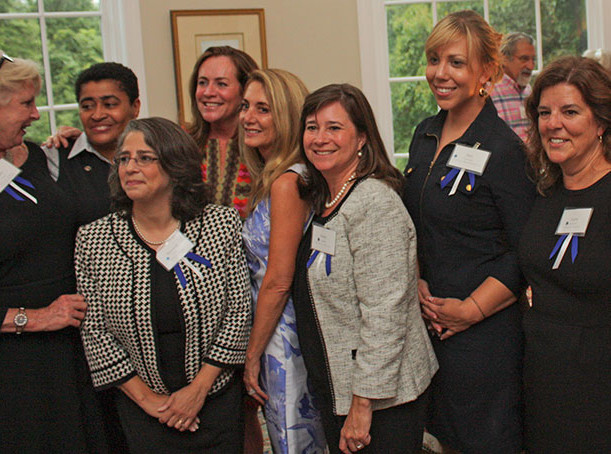
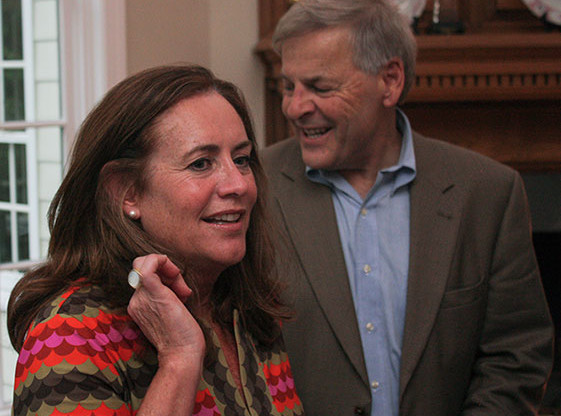
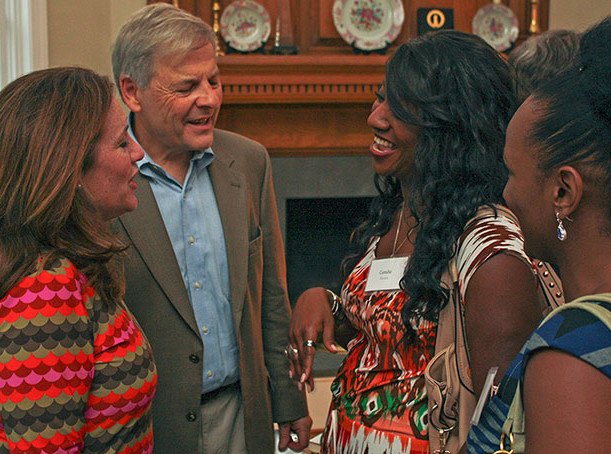
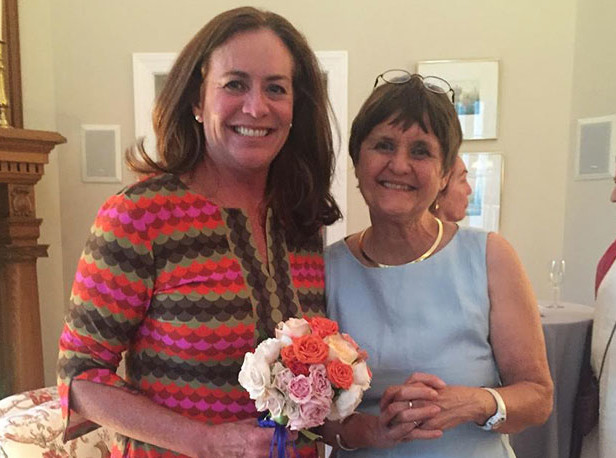
David Toscano with women candidates for the Virginia General Assembly
Ellen Arthur, Susan Hippen, Elizabeth Miller, David Toscano, Dorothy McAuliffe, Angela Lynn, Shelly Simonds, Sara Townsend, and Laurie Buchwald

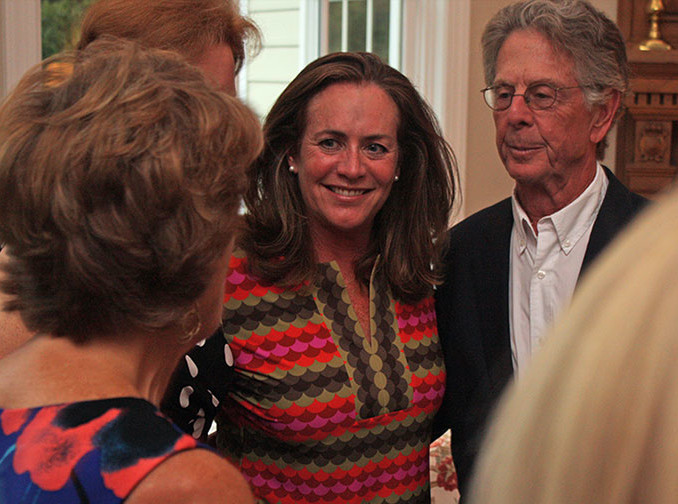
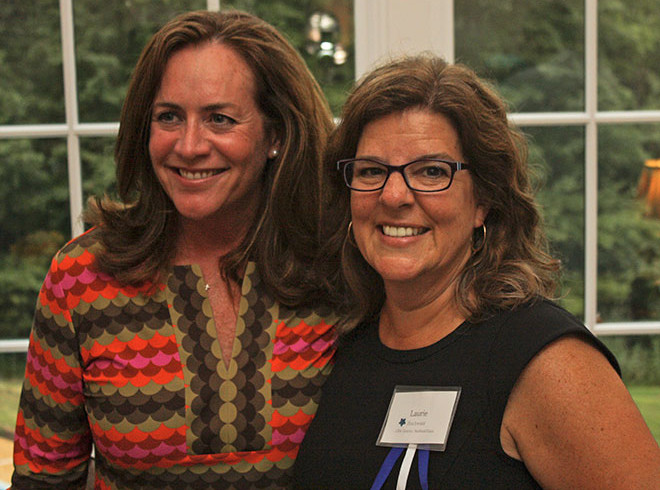
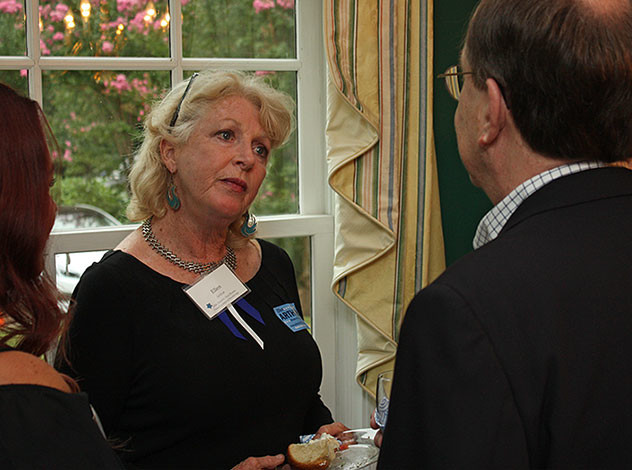
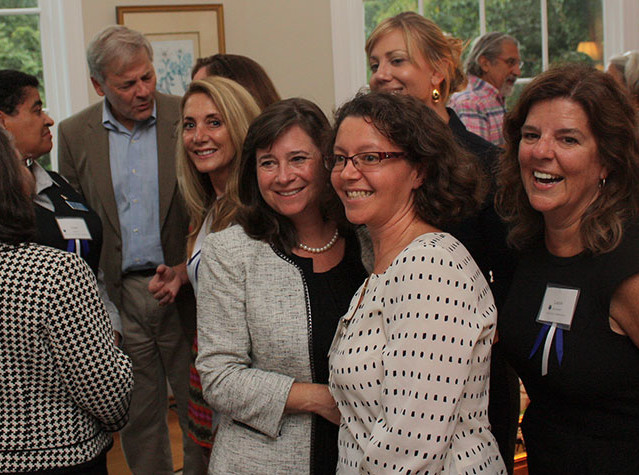
More than 160 people came out to meet seven women candidates for the Virginia House of Delegates from districts all across the Commonwealth and to hear First Lady Dorothy McAuliffe speak about the importance of female representation in our Virginia legislature. Currently, only 16 of the 100 seats in the House of Delegates are held by women. The seven candidates are: Ellen Arthur (24th House District), Susan Hippen (21st House District), Elizabeth Miller (32nd House District), Angela Lynn (25th House District), Shelly Simonds (94th House District), Sara Townsend (31st District),  Laurie Buchwald (12th District)
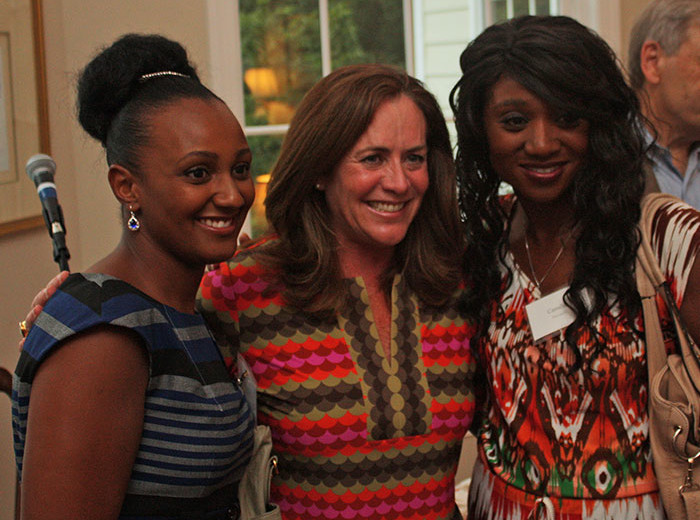
  • Dorothy McAuliffe
  • Dorothy McAuliffe
  • Dorothy McAuliffe with women candidates for the Virginia General Assembly
  • Dorothy McAuliffe with Virginia House of Delegates candidate Laurie Buchwald
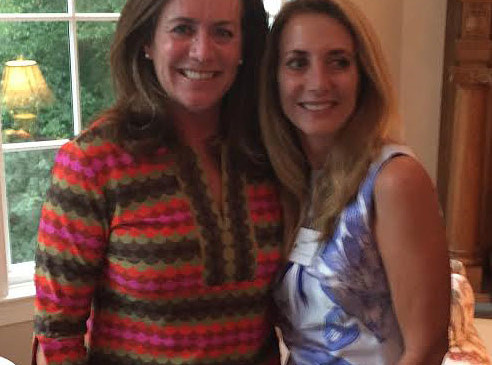
  • Dorothy McAuliffe with Angela Lynn
  • Dorothy McAuliffe with seven candidates for the Virginia House of Delegates
  • 24th Virginia House of Delegates district candidate Ellen Arthur
  • 21st House District candidate Susan Hippen
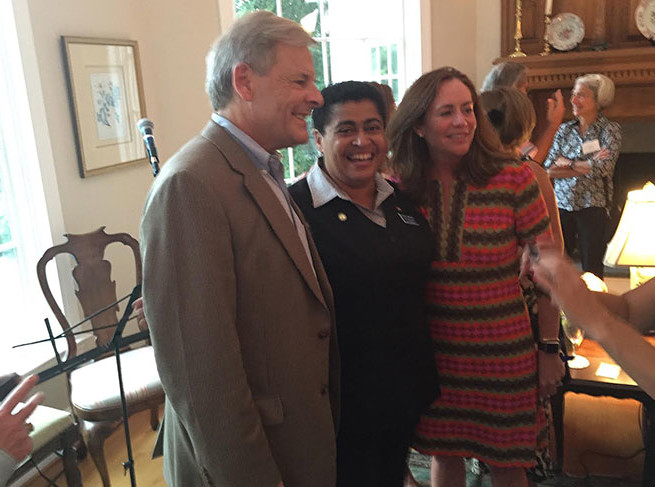
  • Dorothy McAuliffe and David Toscano
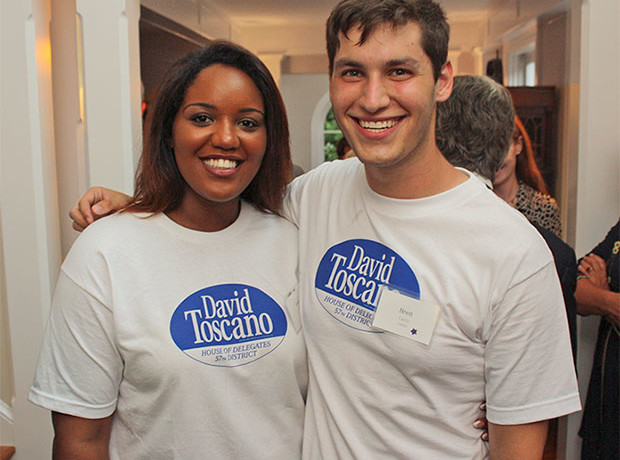
  • University Democrats volunteers
  • Dorothy McAuliffe and Linda Perriello

Filed Under: Events

Join Delegate David Toscano with Special Guest Dorothy McAuliffe on August 30, 2015

August 25, 2015 by David Toscano

Linda Perriello, Roberta Williamson
*****

Judy Campbell & Michael Henke, Kay Ferguson, Francis Fife & Nancy O’Brien,
Connie Kincheloe, Russell Linden, Alice P. Meador, UFCW Local 400

*****

Vito & Bevin Cetta, Dave and Cyndy Chapman, Jane Dittmar, Deborah Easter, Dorrie & Barry Fontaine, Janna & David Gies,
Larry Groves & Debra Bryant, Virginia Geoffrey & John Andelin, Sue Gouldman, William Hamersky & Christine Kennedy,
Dean Kedes, Ludwig Kuttner, Karen Pape, Nancy Spangler & Ned Martin, Susan White

*****

Jennifer Brown, Marie Coles Baker, Gary Berry, Colette Blount, Anne Carley, Carol Carter, Marguerite Cox, Virginia Daugherty, Francesca & Eduard de Lange, Norman Dill, Mike & Melissa Dickens, Patricia Edwards, Lawrence & Vicky Eicher, Lucie Ferguson, Mittie & Will Harvey, Jean Hiatt & David Brown, Simona Holloway-Warren, Susan & Ed Howell, David & Mary Kalergis, Amy Laufer, Peppy Linden, Ann & Leo Mallek, Janet & David Newkirk, Lucia Phinney & Robin Dripps, Meredith Richards, Nila Saliba, Kay Slaughter, Bobbie Spellman, Michael Weber, Jean Wheeler, Blair Williamson, Elizabeth Woodard, Wendy Zomparelli

Elect more women

Special Ticket Price of $30 Available for Members of Women Leaders of Virginia

with

2015 House of Delegates Candidates:

Laurie Buchwald, 12th District

Jennifer Boysko, 86th District

Angela Lynn, 25th District

Elizabeth Miller, 32nd District

Shelly Simonds, 94th District

Sara Townsend, 31st District

Sponsorships Still Available!

Patron…………$2,500

Host…………$1,000

Sponsor…………$500

Friend…………$250

Thank you for supporting Women Candidates for the House of Delegates!

We look forward to seeing you on August 30th at the home of Linda Perriello.

415 Grassmere Road
Charlottesville, VA 22903

5:30-7:30 p.m.

Catering by A Pimento

RSVP at (434) 220-1660, or email events@davidtoscano.com

Filed Under: Events

Redistricting Special Session Falls Apart

August 20, 2015 by David Toscano

Democratic plan remains before the Body

The special session on redistricting called by Gov. Terry McAuliffe to redraw congressional lines that had been ruled unconstitutional by the District Court fell apart on Monday, August 17, 2015, largely over a Republican effort to fire a sitting Supreme Court Justice, Jane Marum Roush. Since there is much public confusion about what actually happened, I will try to provide you some background.

On October 7, 2014, the Federal District Court for the Eastern District of Virginia ruled that the 2012 General Assembly redistricting for the House of Representatives was unconstitutional, holding that the 3rd Congressional District was an improper “racial gerrymandering.” The U. S. Supreme Court rejected the appeal of this decision by the House Republicans in March 2015.   On June 5, 2015, the Federal District Court reaffirmed its decision and directed the General Assembly to draw new lines by September 1, 2015. In response, on July 16, 2015, Governor McAuliffe called for a special session to commence on August 17, 2015, in order to fix the problem. He then sent a letter to House and Senate Democratic and Republican leadership requesting that they return to Richmond in advance of the special session to develop a bipartisan map that could be passed. The Republican leadership immediately rebuffed the Governor and refused to meet. When this happened, House and Senate Democratic leadership moved independently to produce a map that could pass constitutional scrutiny. After considerable work, Democrats provided a new map and it was introduced as legislation in both the Senate and the House. The bill can be accessed here. An explanation of what the proposal does can be found here.

We believe that our map corrected the constitutional problems with the old map, but it is not likely to be considered by the House Privileges and Elections Committee or by the Senate. After the Senate adjourned on Monday, the House Privileges and Elections Committee, the group that would consider our bill, adjourned as well, interrupting a speaker in mid-presentation and calling a halt to the public hearing on redistricting which had brought citizens from throughout the Commonwealth to testify. The Democratic Plan remains before both the Senate and the House, but will not likely receive a vote. (Republicans in the Senate stated on Monday that they were not going to produce or consider a plan, one of the arguments used by the Senate in supporting its motion to adjourn.) The result will likely be that the federal court will draw new lines for the House of Representatives sometime after September 1, 2015.

The redistricting issue got caught up in the debate over whether to retain Justice Roush on the Virginia Supreme Court. As is the Governor’s prerogative under the Virginia Constitution, he appointed Justice Roush to the vacancy created by the retirement of Justice LeRoy F. Millette, Jr. in April. This appointment occurred after a lengthy and public process conducted by the Governor’s office to vet a number of candidates with Bar Associations across the state. After completing of the vetting process, the Governor announced Justice Roush’s appointment on July 27, 2015, having received the endorsement of Republican Delegate and House Courts of Justice Committee Chair Dave Albo. Once the announcement was made, however, the Republican leadership cried foul, and stated that not only would they choose their own candidate, but that they would not even extend the courtesy of an interview to Justice Roush. If she had been removed, it would have marked the first time in 115 years that a sitting justice was taken off the court in Virginia.

Not once did the Republicans question Justice Roush’s qualifications, preferring instead to focus on the fact that the Governor did not request their approval in advance. They maintained this position throughout the day on Monday, August 17, and tried to push through their own candidate. They were foiled in the Senate, where their candidate failed to obtain a majority vote necessary, due to a 20-20 tie. The Senate, having been informed by the Republicans that no redistricting plan would be offered, then voted to adjourn. As a result, Justice Roush keeps her position until her present appointment expires on September 16, 2015. Republicans claim that the Senate adjournment is unconstitutional, but the Senate has adjourned and shows little interest in returning to Richmond.   If the General Assembly is no longer “in session,” the Governor can make another “recess appointment,” and there is much speculation that Gov. McAuliffe will reappoint Justice Roush to the position. This will likely result in a repeat of this debate in January, as she would require confirmation by the House and Senate.

Consequently, when the dust settled Monday late afternoon, we were left with the following:

  1. Justice Roush retains her appointment as a Justice of the state Supreme Court at least until it expires on September 16, 2015.
  2. Since the Senate has adjourned, no bills for redistricting can be taken up and passed, even if the House were to produce such a bill.
  3. Democratic Leadership still has a bill before the body, but it is unlikely that this bill will be considered by the General Assembly prior to September 1, 2015.
  4. Numerous members of the public were denied the opportunity to speak on redistricting issues or on the Democratic plan that had been proposed, since House Republicans have adjourned the Privileges and Elections Committee.
  5. The Federal court will likely draw the new congressional lines.
  6. We will need to work hard to repair the numerous hurt feelings and bring some bipartisan conciliation to the General Assembly.

As always, it is a pleasure to serve the 57th District in Virginia’s House of Delegates. Please do not hesitate to contact me with any questions or comments on matters before the Commonwealth.

Sincerely,

David Toscano

P.S. As many of you know, former UVA professor and civil rights icon Julian Bond, died last Sunday. My floor speech in memory of Julian Bond can be viewed below.

Filed Under: General Assembly 2015 Tagged With: Judicial Appointments, Legislative Redistricting, Special Session

Redistricting Special Session to begin August 17, 2015

August 14, 2015 by David Toscano

The redistricting process is one that voters should should follow more closely than they have in the past. It is critically important for the future of democracy and how citizens choose their leaders. Over the last ten years, redistricting software used to draw districts has become so sophisticated that representatives, in effect, have chosen their constituents rather than the other way around.  In the process, we have been left with more political partisanship, less competition, and greater political cynicism in our electorate. Under the U. S. Constitution, redistricting must to occur every ten years; it is through this process that legislators are supposed to readjust the boundaries in light of population shifts. The U.S. Supreme Court has set specific standards for the constitutionality of redistricting. If you would like some additional background on the subject, go to One Virginia 2021, Virginians for Fair Redistricting, to read more.

Standards for constitutional redistricting suggests that districts be compact, contiguous, and include populations that have a “community of interest.” The 57th House District that I represent actually is a good example of this. It looks like a circle and includes mostly urban and suburban areas that have similar strengths, values, and challenges. Many districts in Virginia, however, are not drawn this way, and often appear as strange shapes.

We return to Richmond because of the ruling of the federal court that when the Virginia General Assembly drew the lines for the Virginia Congressional Districts in 2011, the 3rd Congressional District was drawn in an unconstitutional way. On October 7, 2014, the federal court issued its opinion and directed the General Assembly to redraw the lines. The Republicans appealed this decision to the U.S. Supreme Court. In March 2015, the Supreme Court refused to hear the case, and sent it back to the district court. On June 5, 2015, the district court directed the General Assembly to redraw the unconstitutional lines by September 1, 2015. When the Republican-controlled legislature showed no desire to have a special session to do this, the Governor issued a call for this session in a letter of July 16, 2015. Two weeks later, he sent another letter to the House and Senate Democratic and Republican Leadership asking us to return to Richmond before the special session began to see if we could develop a bipartisan map prior to the session. The Republican Leadership said no. It is clear that the Republican Leadership wants no part of drawing new Congressional lines, feeling that it will upset their present 8-3 majority in the Congressional delegation, and will potentially lead to the election of a delegation which more closely conforms to what is the present political configuration in our state, where about 50 percent of the citizens vote Democratic and 50 percent vote Republican.

In my view, we have a short-term and a long-term problem. First, we are under a court order to act by September 1, 2015. For attorneys like myself, court orders are a big deal; without complying with court orders, we undermine the Rule of Law. Hence, we need to find a fix to remedy the unconstitutional map drawn in 2011. With this in mind, Democratic Leadership is proposing a new map that we believe addresses the constitutional infirmities with the old lines. We did so in order to give the public an opportunity to comment and offer suggestions in advance of the General Assembly session. We have also challenged our Republican colleagues to develop a map of their own so we can work together to fix the short-term problem.

Our map specifically accomplishes the following:

  1. In redrawing the 3rd District, race is no longer the predominant consideration. The 3rd District is no long “packed” in a way that violates the Equal Protection clause of the 14th Amendment, which made the old map unconstitutional.
  2. The new Congressional map has districts that are more compact that the old unconstitutional plan.
  3. The new map respects communities of interest and does not divide political subdivisions the way the old map did.
  4. The new map meets the standards of Article II, Section 6, of the Virginia Constitution, which requires that “every electoral district shall be composed of continuous and compact territory and shall be so constituted as to give, as nearly as is practical, representation in proportion to the population of the district.”
  5. The map is drawn to equally divide the population of Virginia between all eleven districts and conform with the one person – one vote rule.
  6. The new districts comply with Section 5 of the Voting Rights Act in that they maintain the opportunity of minorities to elect candidates of their choice. While the 3rd District moves a number of African-Americans to make the line drawing constitutional, there are other districts where African-American voting population increases, specifically in the 3rd district and the 5th (our Congressional district).
  7. Many of the new districts are more competitive than ones that existed under the old plan, especially in the 10th, 5th, and 3rd. In reviewing the voting pattern in the proposed districts, five of them tend to vote Democratic in greater numbers than Republicans, five of them tend to vote Republican in greater number than Democrats, and one is a district that can and does vote both ways, depending on the election. This is the type of competitiveness we believe Virginians want.

As a long-term solution, many legislators support creation of a non-partisan redistricting commission. I have supported these bills since I was elected to the General Assembly in 2006 and will continue to do so. The Republicans have defeated them in every single session. These commissions have been found to be constitutional by the U. S. Supreme Court. To date, House Republicans have expended over $300,000 in Virginia taxpayer dollars in legal fees defending redistricting cases, including $225,000 in the Congressional case where the line drawing has been shown to be unconstitutional. If we had a non-partisan redistricting commission, it is less likely that these kinds of taxpayer expenses would be incurred, and more likely that the line drawing would not be designed for incumbent protection or an unconstitutional purpose, but instead would be based on the principle that citizens should have an opportunity to choose their own representatives rather than the other way around.

While many of my colleagues may bristle at the notion of having their ability to draw lines taken away from them, those who have studied this issue carefully believe that our long-term goals of diminishing political partisanship and enhancing voters’ control over the electoral process will be better served by nonpartisan commissions. It is my hope that the General Assembly will embrace this concept sooner rather than later.

###Delegate David J. Toscano represents the 57th District in Virginia’s House of Delegates, which is comprised of the City of Charlottesville and a portion of Albemarle County, a seat once held by Thomas Jefferson. Mr. Toscano also serves as the House Democratic Leader, a position he has held since 2011. You may contact his office in Charlottesville at (434) 220-1660, or email him, david@davidtoscano.com.

Filed Under: General Assembly 2015 Tagged With: Legislative Redistricting

Hearings for VA Supreme Court Nominee

August 13, 2015 by David Toscano

[su_box title=”FOR IMMEDIATE RELEASE” box_color=”#336699″]Contact: Carmen Bingham
(434) 220-1660
carmen@davidtoscano.com[/su_box]

Friends,

I wanted to pass along this article that recently appeared in the Richmond Times-Dispatch.  I think it accurately captures the differing perspectives.  I will continue to work with Leader Saslaw and other Democrats to ensure that the rule of law is applied in a fair and transparent manner in the Commonwealth.

Please do not hesitate to contact me if I may be of assistance.

Sincerely,

David J. Toscano

Democrats urge ‘fair, and open hearings’ on Supreme Court justice

Democratic leaders in the General Assembly have sent a letter to Republican leaders who control the legislature urging “full, fair and open hearings” in the judicial selection process for state’s highest court.  The Aug. 7 letter, sent by Senate Minority Leader Richard L. Saslaw, D-Fairfax, and House Minority Leader David J. Toscano, D-Charlottesville, is one of a series of letters and petitions sent to Republican leaders in support of state Supreme Court Justice Jane Marum Roush.  Governor Terry McAuliffe appointed the former Fairfax County Circuit Court judge last month to fill the Supreme Court vacancy created by the retirement of Justice LeRoy F. Millette, Jr.  Republican leaders have announced that they will support a different candidate — Court of Appeals Judge Rossie D. Alston Jr., — when the legislature reconvenes Monday in a special session to tackle congressional redistricting.

Republicans were angered that the governor did not more extensively collaborate with them on his recess appointment of Roush — a well-regarded judge who presided over the trial of Beltway sniper Lee Boyd Malvo.  Roush had bipartisan backing in Fairfax County.  Her supporters include Del. David B. Albo, R-Fairfax, chairman of the House Courts of Justice Committee.  The governor said the removal of a justice from the court would be unprecedented and termed the GOP plan to replace Roush “a political temper tantrum” that would “kick this woman to the curb who has served with distinction for 23 years.”

As of Monday evening, there appeared to be no movement from House Republicans on their intention to replace Roush with Alston.  “The House position has not changed,” said Matthew Moran, spokesman for House Speaker William J. Howell, R-Stafford. Albo could not be reached for comment.  The Virginia Constitution gives the governor the power to make judicial appointments while the General Assembly is in recess; however, all judicial appointees must be certified by the legislature, and any interim appointments must be approved by the assembly or they expire 30 days after a legislative session convenes.  The legislature could elect Roush to a full, 12-year-term or select another candidate to fill the vacancy.

“The Constitution makes very plain that it is the General Assembly that has this responsibility, not just the Republican caucuses of the House and Senate,” Saslaw and Toscano wrote in the letter sent to the chairmen and membership of the House and Senate Courts of Justice Committees, and to House Speaker William J. Howell, R-Stafford.  The letter urges committee leaders to “convene full, fair and open hearings … to consider the respective qualifications of Justice Roush and the Republican Caucuses’ candidate for election to the Virginia Supreme Court.  This process should be completely open to the public, should offer all committee members a chance to pose question to both Justice Roush and Judge Alston, and should consider public comment from concerned citizens who might want to participate in this decision,” the letter says.

A bipartisan group of more than 100 female attorneys also wrote to Republican leaders of the Virginia General Assembly urging them to not use Roush’s appointment as a “political tool in partisan party politics.”  Roush also received support from the Fairfax Bar Association.  An online petition urging her retention has garnered more than 800 signatures.

Filed Under: Archive: Press Releases, News Tagged With: Judicial Appointments

  • « Previous Page
  • 1
  • …
  • 35
  • 36
  • 37
  • 38
  • 39
  • …
  • 62
  • Next Page »

Contact Me

123 E. Main Street
8th Floor
Charlottesville, VA 22902
Email: davidjtoscano@gmail.com
Phone: 434-960-7171

Mailing Address

P.O. Box 501
Charlottesville, VA 22902

Make a Payment

Authorized by David J. Toscano, Attorney
© Copyright 2025 · DavidToscano.com · All Rights Reserved ·